Click on this image to order the book

Click on this image to order the book
The book version of James Gammell's life story is now available. Click on this image.

Wednesday, September 29, 2010

The Hendricks Family Flees to Illinois

Drusilla Hendricks demonstrated remarkable strength and heroism as she and her family continued to persevere through unimaginable trials.  Her husband, James, remained completely paralyzed.  Even with the help of ten-year-old Elizabeth [James Gammell's future wife] and nine-year-old William, she could not lift the weight of his body.  In addition to caring for James, she bore the full responsibility for the needs of her family, including two younger children and a nursing baby.  In mid-January 1839, Joseph Smith, Sr. (father of the Prophet), Isaac Morley, and several others came to the Hendricks home and anointed and administered to James.(1)  When they had completed the blessing, they stood James on his feet and held him upright, and “he began to work his shoulders.”  In the days to come Drusilla continued to “rub him with strong vinegar and salt and liniments.”(2)

As the winter wore on, many families were leaving Missouri as quickly as they could, but Drusilla had no idea how she could possibly go, until Brother Leaney “came to see us and said we should not be left behind.” Leaney had been shot and wounded at Haun’s Mill a few months before.  He “had been shot through and through from both sides, the balls passing through the lungs, but he was miraculously healed.  He had twenty-seven bullet holes in his shirt. I [Drusilla] counted them myself.  He only had eleven wounds to be dressed.”(3)

By the time Drusilla and her family left Missouri and started for Illinois, James Hendricks had learned to pull himself to his feet without help. On the first day of April 1839, when Joseph Smith, Sr. learned that the Hendricks family had arrived in Quincy, he went immediately to visit them at their campsite. Father Smith, as they called Joseph, Sr., assisted by several other brethren, gave James a second priesthood blessing. They “then assisted him to his feet and he walked, between two of them, some thirty yards and back.”(4)

Quincy, Illinois (2008)
on the Mississippi River
from http://www.mormonwiki.com/
in public domain

Drusilla was now faced with the responsibility of finding lodging for her family, and she soon found out how difficult that would be.  Quincy, Illinois, a town of about two thousand residents, was completely unprepared for the influx that winter of five thousand refugees,(5)  members of The Church of Jesus Christ of Latter-day Saints who had been driven from their homes in Missouri.  Nevertheless, the people of Quincy responded with great empathy and kindness, and did all they could to provide the exiles with food and shelter.  Soon Drusilla was able to find makeshift lodging for her family, a small room, “partly underground and partly on top of the ground.”(6)

Living in such damp and confined quarters, James fell ill.  Within two weeks they ran out of food and lost their small heifer that had provided them with a little milk twice a day.  As Drusilla described, “we were like Job of old and my husband was as sore, for his blood cankered and he broke in sores all over his body so that you could not put a pin point on him without putting it on a sore, from the crown of his head to the soles of his feet.”(7)

Though Drusilla’s trials were of biblical proportion, so were the miracles that sustained her and her family. As she prepared mush for her children with her last spoonful of sugar and last saucer of corn meal, doubt and conflict began to fill her mind.  She answered it with her usual faith and courage.  Soon a feeling of peace came over her, and these words came into her mind: “Hold on, for the Lord will provide.”  She resolved that she “would trust Him and not grumble,” and then went about washing everything and cleaning her house thoroughly, saying: “If I die, I will die clean.”  That afternoon Brother Rubin Allred drove fifteen miles to the Hendricks’ home and delivered a sack of meal.  “I felt you were out of bread,” he said, “so I came by the mill to get my grinding done before I came here and it made me late.”  A few minutes later her son William came home with fifty cents he had earned, and with that Drusilla bought six pounds of flour, a few pounds of pork, and half a bushel of potatoes.  Though they ate sparingly, the supply was gone in two weeks, and again they had nothing.  Drusilla recalled, “I felt awful, but the same voice that gave me comfort before was there to comfort me again, and it said, Hold on, for the Lord will provide for his Saints.”  She washed and cleaned, the same as before, and soon Brother Alexander Williams appeared at the back door with two bushels of meal on his shoulder:

I looked up and said, Brother Williams, I have just found out how the widow’s cruse [of oil] and barrel [of meal] held out through the famine.(8)  He asked how.   I said just as it was out [empty] someone was sent to fill it.  He said he was so busy with his crop that he could hardly leave it, but the Spirit strove with him saying Brother Hendricks’ family is suffering, so I dropped everything and came by and had it ground lest you would not get it soon enough.   I [Drusilla] soon baked a cake of the meal and he blessed it and we all partook of it and water.(9)

Brother Williams promised to bring more corn meal to the Hendricks when their supply ran low.  At that time he was living with a family named Edwards and tending their farm.  When he approached him for more corn, Mr. Edwards replied, “You shall not work for me for corn and take it to the Saints who have been driven and robbed.  Tell me where you go and I will go myself.”  Edwards arrived just in time to refill the Henricks’ empty barrel with cornmeal.(10)

View of Nauvoo on a bend of the Mississippi River
Unknown artist.  Oil on canvas, 1848-50
Painted after the Saints fled to the West in 1846,
and after the temple (center white) was burned by a mob in 1848.
in public domain

In late 1839 the Mormons purchased the small town of Commerce, Illinois, located forty miles up the Mississippi River from Quincy.  In April 1840 they renamed it “Nauvoo”.(11)  (Within four years, Nauvoo's population had grown to twelve thousand, rivaling the size of Chicago at the time.)  Brother Lewis moved the Hendricks family to Nauvoo in March 1840.  The High Council “voted to donate a city lot to Brother James Hendrix (sic), who was shot in Missouri; also voted to build him a house.”(12)

At this point Drusilla was supporting her family herself by taking in washing and sewing.  She was able to hire a man to cover the newly built log house and build a chimney.  She and Sister Melinda Lewis chinked and plastered the house, while the hired man plowed her lot and made it ready for a garden.  Her husband, James, was strong enough now to “turn on his elbow, turn his feet out of bed, and take things in one hand.”  He contributed to his family’s support by borrowing enough money to a buy large quantity of flour at the mill to sell for profit.  They took in boarders to earn money, and were able to pay a carpenter and a mason to build a new brick house, finished in 1842.

The Hendricks lived in Nauvoo for about seven years, then again “persecution began to rage and we had hard times again.”  By 1844 the family was again destitute.  Drusilla left Nauvoo and went to St. Louis for eight weeks to earn money for food and clothing.  Catherine went along; Elizabeth stayed behind to care for the family.  She started back to Nauvoo on Friday, June 28, and heard while on the riverboat that Joseph Smith, the Mormon Prophet, and his brother Hyrum had been martyred the day before.  Her grief was almost more than she could bear.  In Illinois “they killed our Prophet and Patriarch and drove us out again.”(13)

William Dorris Hendricks (1829-1909)
His sister Elizabeth Hendricks married James Gammell

After their winter expulsion from Nauvoo, Illinois, in February 1846, the Latter-day Saints began a 300-mile trek across Iowa.  It proved to be the hardest leg of their westward journey, averaging less than three miles a day.  Reaching the Missouri River they camped on both sides, Council Bluffs, Iowa, and Winter Quarters, Nebraska, near Omaha.  Here, while they were making preparations to continue the journey the following spring, William Hendricks was called to join the Mormon Battalion.  Drusilla was heartbroken: “…my son was all I had to depend on, his father being helpless and Joseph, my other son, being in his ninth year only and my girls not healthy.  One would say to me, Is William going. I answered, No, he is not.”  (At this time James Hendricks could walk with the aid of a cane.)  Drusilla said she knelt down and told the Lord if He wanted my child to take him, only spare his life and let him be restored to me and to the bosom of the church.”(14)

Drusilla’s prayers were answered when eighteen-year-old William returned to his family ten days after they reached the Salt Lake Valley in October 1847.  William immediately “went to work and built [them] a house in the Fort wall so we made ourselves as comfortable as possible.”(15)
____________________________
  1. The brethren laid their hands on James’ head, anointed his head with oil, and administered a priesthood blessing for the healing of the sick.
  2. Robert Raymond, ed., Historical Sketch of James Hendricks and Drusilla Dorris, chapter 5.
  3. Robert Raymond, chapter 6.
  4. Robert Raymond, chapter 6.
  5. “Eight to ten thousand Latter-day Saints migrated to western Illinois that season. The community of Quincy could not accommodate all the new arrivals. During the spring and summer of 1839 many people were forced into surrounding farmlands and adjoining counties wherever they could find a place to stay.” (See Church History in the Fulness of Times, chapter 17.)
  6. Robert Raymond, chapter 6.
  7. Robert Raymond, chapter 6.
  8. I Kings 17:16.
  9. Robert Raymond, chapter 6.
  10. Robert Raymond, chapter 6. (Alexander Williams baptized Mr. Edwards and his wife.)
  11. The name Nauvoo is derived from traditional Hebrew with an anglicized spelling. The word comes from Isaiah 52:7, “How beautiful upon the mountains...”
  12. History of the Church, Vol. 4, Ch. 4, p. 76.
  13. Robert Raymond, chapters 6, 7, and 8.
  14. Robert Raymond, chapter 8.
  15. Robert Raymond, chapter 9.

Monday, September 6, 2010

The James and Drusilla Hendricks Family

James and Drusilla Dorris Hendricks
with grandchild, thought to be
James Gammell's daughter Elizabeth
ca. 1852

The James Hendricks family entered the Salt Lake Valley on October 2, 1847, with the Jedediah M. Grant – Joseph B. Noble Wagon Company. James and Drusilla were accompanied by four of their five children: Elizabeth (19), future wife of James Gammell, Catherine (15), Rebecca (11), and Joseph (9). The Grant/Noble Company, consisting of 171 souls, had started its three and one-half month journey on June 19 at the outfitting post on the Elkhorn River about twenty-seven miles west of Winter Quarters, Nebraska.(1)

One year earlier (June 1846) William Hendricks, then age 16, along with five hundred other men, volunteered to join the Mormon Battalion. President James K. Polk had authorized Colonel Stephen W. Kearny to enlist a battalion of Mormon men to help fight the war with Mexico. Initially the Saints opposed the request for volunteers, but the negotiations proved to be a benefit to both parties: the United States would retain the loyalty of the Saints, whose persecutions had all but destroyed their trust in the federal government, and the Mormons could “earn desperately needed capital for the exodus.” They were able to purchase the necessary wagons and supplies with army wages totaling $30,000. In his effort to encourage support for the venture, Brigham Young said, “Let the Mormons be the first men to set their feet on the soil of California…This is the first offer we have ever had from the government to benefit us.” He promised that the families of the volunteers would be carefully provided for, and also counseled the volunteers to conduct themselves properly, and if they did so, they would not have to fight. (As it turned out, their only battle was with a herd of wild bulls near the San Pedro River in Arizona.) The 2,000-mile Mormon Battalion march from Council Bluffs, Iowa, to San Diego, California, was the longest single military march in U.S. history, and served to help the United States secure the lands of California, Utah, Arizona, and other Western states.(2)  The battalion was discharged one year later, and William Hendricks was reunited with his family two weeks after they arrived in the Salt Lake Valley.

James and Drusilla Hendricks were first introduced to the Mormon missionaries while living in Franklin, Kentucky, and were converted and baptized in March 1835. They left Kentucky to join other Mormons in Clay County, Missouri, in May 1836. Since childhood Drusilla had demonstrated a strong faith in God and in the Bible. Later in her life she was revered as a woman of great faith and courage. In her autobiography she wrote about one habit she struggled to overcome:

I had been in the habit of using snuff and was just out. I knew it was a disgusting habit and I had heard the Word of Wisdom read, also my husband desired that I discontinue its use. I went quite a way out of camp. I there pled with the Lord to take away the desire for snuff from me and if he would do this, it would be a sign unto me that I would know he had caused the revelation (Word of Wisdom) to be written.(3)   I then went back to camp, and forgot that I used snuff for four days after and I never wanted it again. I had often tried to quit but this time the Lord took the desire away from me and gave me a testimony of the truth of the Word of Wisdom.(4)

Drusilla recorded that the hostility and persecution against the Mormons in Clay County became so great that “we all gave up our land and agreed to go to Caldwell County. We were to be let alone there so we were glad to do so.”  By August 1838, James was called to take his turn standing guard to protect the settlement from the gathering mobs. On the evening of October 24, the mob began to burn the crops and take Mormon men as prisoners, in order to force the Latter-day Saints to leave Caldwell County. James and a large group of men tried to form a line of defense that night at Crooked River. At dawn Drusilla stood looking out her window:

I saw a Mr. T. Snider (he did not belong to the church, but a good man) get off his horse at the gate. (I saw him wipe his eyes, I knew that he was crying.) He came to the door and said Mr. Hendricks wishes you to come to him. I asked where. He said to the widow Medcalf's and that he had come for me. I asked where and how he was shot and he thought he was shot in the hip.(5)

Upon reaching the widow’s house, Drusilla saw nine of the men, “wounded and pale as death.”  She found her husband lying in a bed in the same room with Apostle David W. Patten, who was taken to the Winchester home, where he died that night.  (Patten is now considered Mormonism's first martyr for the faith.)  When she spoke to James:

He could speak but could not move any more than if he were dead. I tried to get him to move his feet but he could not. This was Thursday, October 25, 1838, and the next Tuesday was the Battle of Haun’s Mill,(6) where men and boys were slaughtered and thrown into a dry well 18 or 48 in number, out of which only one (Benjamin Lewis) received a decent burial.

My husband was shot in the neck where it cut off all feeling of the body. It is of no use for me to try and tell how I felt for that is impossible, but I could not have shed a tear if all had been dead before me. I went to work to try and get my husband warm but could not. I rubbed and steamed him but could get no circulation. He was dead from his neck down.(7)

Drusilla was advised that it wasn’t safe to return to their home, so that evening a neighbor came with a wagon with a bed in it for James and took them to Far West, while another neighbor went to their home to care for their five children.

Two days later on October 27, Missouri governor, Lilburn W. Boggs, issued the infamous Extermination Order, in which he instructed the militia to drive the Mormons from the state of Missouri because of their

...open and avowed defiance of the laws, and of having made war upon the people of this State ... the Mormons must be treated as enemies, and must be exterminated or driven from the State if necessary for the public peace—their outrages are beyond all description.(8)

(Governor Christopher “Kit” Bond rescinded the order in 1976, after nearly 138 years. He declared that the original order violated legal rights established by the U.S. Constitution, and offered his regrets on behalf of the State of Missouri.)

General Samuel D. Lucas, leading a militia of 7,000 men, informed the Mormons at Far West that "...they would massacre every man, woman and child..." if Joseph Smith and several other church leaders were not given up. Joseph Smith, Sidney Rigdon, Parley P. Pratt, Lyman Wight, and George W. Robinson surrendered the first day of November.(9)  Soon after the surrender, Drusilla and James ventured to leave Far West and return to their home and children. They found that the mob had “robbed the house of [the] bedding and in fact everything but [the] beds.” James was still paralyzed from head to foot, leaving Drusilla with the task of settling their business matters and preparing to leave the state of Missouri. She sold what she could and gave up their land for enough money to buy two yoke of cattle.  The following spring they left behind everything, except what they could fit into their small wagon.(10)
_______________________________
  1. http://lds.org/churchhistory/library/pioneercompanysearch
  2. Church History in the Fulness of Times, chapter 25.
  3. For an explanation of the Word of Wisdom see http://www.mormon.org/commandments/ then scroll down to “Obey the Word of Wisdom.”
  4. Robert Raymond, ed., Historical Sketch of James Hendricks and Drusilla Dorris, chapter 4.
  5. Robert Raymond, ed., Historical Sketch of James Hendricks and Drusilla Dorris, chapter 5.
  6. Haun’s Mill is in Caldwell County, Missouri. The fifty-five perpetrators of the massacre were known by name, but never prosecuted.
  7. Robert Raymond, ed., Historical Sketch of James Hendricks and Drusilla Dorris, chapter 5.
  8. See Wikipedia.com: Although the Haun’s Mill massacre took place a few days after Missouri governor Boggs issued the Extermination Order, most historians have now concluded that the militia unit had neither the time nor the opportunity to have received news of the order.
  9. Orson F. Whitney, Life of Heber C. Kimball, 1888, p. 229.  Joseph Smith, Parley P. Pratt, and others were incarcerated in Liberty Jail for more than four months.
  10. Robert Raymond, ed., Historical Sketch of James Hendricks and Drusilla Dorris, chapter 5.

Sunday, August 22, 2010

Valley of the Great Salt Lake

Brigham Young Monument
Salt Lake City, Utah
(from Wikimedia Commons)

At the trapper’s camp in Cache Valley, Utah, Jim Bridger built a bullboat out of thick willows woven into a basket with buffalo hide stretched over it.  He used it to settle an argument about where the Bear River ended.  Bets were laid, and Bridger set off down the river in his leather tub.  At the mouth of the Bear he discovered a great body of water.  The water tasted like brine! When he returned to camp to relay the news to the other trappers, one of them exclaimed, “Hell, Jim, you done found the Pacific Ocean!”  It was fall 1824, and Jim had actually discovered Great Salt Lake.  “Jim always felt peculiarly possessive of Salt Lake Valley. No wonder.  He had found it; he loved it; it was his!  It might well have been called Bridger’s Hole….”(1)

On July 24, 1847, the Mormon pioneers claimed the valley that Bridger loved so well.  Brigham Young was ill with mountain fever when his wagon company emerged from the mouth of Emigration Canyon.  Here they stopped, and Brigham arose from his sick bed to survey the valley below.  After several minutes he said, “It is enough. This is the right place. Drive on!”(2)   An advance company of pioneers had entered the Salt Lake Valley two days earlier on July 22, and had started immediately to create a crude irrigation system and prepare for planting.

In 1847 James Gammell had no connection whatsoever to the Mormons or to their exodus from the United States, but he would soon find himself a participant in the establishment of the State of Deseret,(3) as Brigham Young called the Great Basin:

The Saints(4) were virtually the only white settlers in the vast Great Basin, the name for an area about the size of Texas between the Rocky Mountains on the east, the Sierra Nevadas on the west, the Columbia River drainage on the north, and the Colorado River drainage on the south. The area was relatively isolated and arid and short on timber and game. The Saints realized that settling here would require considerable faith and their best efforts, but they believed that with God’s help they could succeed.(5)

Map of the Proposed State of Deseret (1849-1850)
(from Encyclopedia of Mormonism, Vol. 1, "Deseret, State of")

James visited the Great Basin area several times between 1843 and 1849.(6)  Upon his return to Spring Arbor, Michigan, after one of his trapping expeditions, he learned that his wife, Harriet, was ill.  We don’t know if he was at her bedside when she died, or if he arrived later, only to be told the tragic news of her death (August 20, 1848.)   But now, dealing with a burden of grief, he was anxious to be on the move again.  Early in 1850 he left his three-year-old son, Orlin, in the care of Harriet’s parents and headed west, this time arriving in Great Salt Lake City.

James must have been successful in finding employment among the Mormons almost as soon as he arrived in the valley.  Perhaps Brigham Young had met him and become aware of his skills during one of James’ earlier expeditions from Michigan.  In any event, not long after his arrival he negotiated a contract with Brigham to dig 100,000 rods (312.5 miles) of ditch at one dollar per rod.(7)   Making a ditching machine, probably like the one he had referred to while in Van Diemen’s Land, he was able to finish the contract.  James has been given credit for other public works during this period, such as building the bridge at Ogden and one across the Jordan River, and inaugurating the planting of trees in the valley.(8)

The year 1850 was an eventful one in the growth and development of the Salt Lake Valley, as well as in the life of James Gammell.  Although we have no details about his conversion, James made the decision in 1850 to become a member of The Church of Jesus Christ of Latter-day Saints.  In August he was baptized by Apostle Parley P. Pratt.  A short time afterwards James also received the priesthood, and was ordained to the office of a Seventy by E. [Ezra] T. Benson.(9)  (See note below for an explanation of the Mormon doctrines of baptism and priesthood.)

In September 1850 the United States Congress formally established the Territory of Utah and appointed Brigham Young as governor.

On September 14, 1850, “Daniel H. Wells moved that the Supervisor of roads be instructed to proceed forthwith to improve the streets and roads, by making ditches, turnpike roads, and making good and sufficient bridges, aqueducts, &c…and that he employ Mr. Gammel [sic] with his improved ditching machine and scraper, to work under his direction upon the public works…”(10)

On Saturday, October 5, 1850, “The General Assembly of the State of Deseret met at the Bowery, Great Salt Lake City, pursuant to adjournment… The resignation of Robert Pierce as Supervisor of roads was accepted, and Mr. Gammell appointed in his place.”(11)

On November 27, 1850, James Gammell married Elizabeth Hendricks, daughter of James and Drusilla Hendricks.

Note:  Baptism is a sacred, saving ordinance in which one follows the example of Jesus by being baptized by immersion in order to “fulfill all righteousness” (Matthew 3:15.) It is a covenant or promise with God to accept His Son Jesus Christ as the Redeemer, and to obey His commandments. If a person honors this sacred covenant, God forgives his sins, and he is cleansed from all unrighteousness. First, a person is baptized by being lowered under water and raised again by a one having authority from God to do so. This action symbolizes Jesus’ death, burial, and resurrection, and it also represents a willingness to live as true disciples in obedience to God’s commandments to the end of one’s life. Following baptism, a person is confirmed a member of The Church of Jesus Christ of Latter-day Saints, and receives the gift of the Holy Ghost. Priesthood authority, the same that existed in the original New Testament Church of Jesus Christ, is the authority and power to act in God’s name for the salvation of all God’s children. It is delegated or conferred, also by the laying on of hands, upon all worthy male members of the Church over the age of twelve. (See http://www.mormon.org/ )
_____________________________
  1. Stanley Vestal, Jim Bridger, Mountain Man, p. 64. (Some scholars claim Etienne Provost was the first white man to see the Great Salt Lake.)
  2. Church History in the Fulness of Times, chapter 26.
  3. “Deseret” is a word from the Book of Mormon meaning honeybee, a symbol of work and industry (see Ether 2:3.)
  4. Members of The Church of Jesus Christ of Latter-day Saints (Mormons).
  5. Church History in the Fulness of Times, chapter 27.
  6. Wheeler, pp. 333-34.
  7. James Gemmell obituary, The Dillon Tribune, April 9, 1881.
  8. Hardin, “Sheridan’s James Gemmell”.
  9. Baptism and ordination dates found by Weeks & Haslam research into early Church records, recorded in a letter to Raymond Gammell, dated 10 Oct 1973.
  10. Journal History of the Church, Church History Library Archives, Salt Lake City.
  11. Journal History of the Church.

Tuesday, August 17, 2010

Recent Article on James Gemmell

Dr. John C. Carter, Museum and Heritage Advisor for the Ontario Ministry of Tourism and Culture in Toronto, is an expert on the Canadian Rebellion, and has done extensive research in Tasmania.

On August 13, 2010, he published an article about James Gemmell in an online magazine called Thousand Islands Life:

http://www.thousandislandslife.com/

I encourage the Gammell/Gemmell clan to leave comments at the end of the article.


Another excellent website, Rebels and Raiders by Shaun McLaughlin, mentions James Gammell at the end of the following article, and refers to The James Gammell Chronicles under "Further Reading":

http://www.raidersandrebels.com/2010/06/benjamin-wait-samuel-chandler-2.html#more

Tuesday, August 10, 2010

James Gammell's Yellowstone Expedition Revisited

August 3, 2010

Hi, Liz,

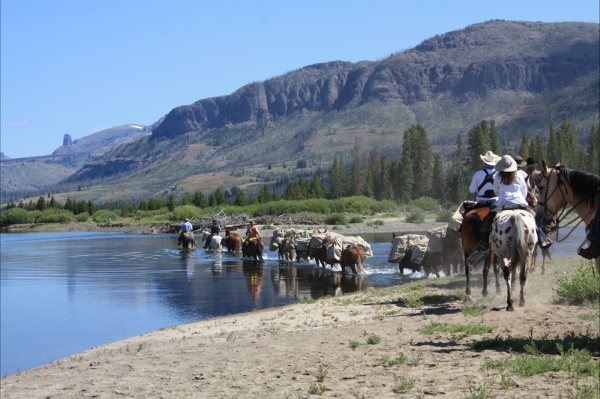
We are part of the Montana bunch of James's offspring.  We live in southwest Montana in Gallatin Gateway, near Bozeman, and we operate a ranch on the Yellowstone River north of Yellowstone Park.

My daughter Anna and I just spent eight days on horseback exploring part of the route that James and Jim Bridger took in 1846 through the area that is now the remote southeast corner of the Park.  James described the trip to Wheeler as starting in the Jackson Hole area and traveling north into what we now call the Thorofare River-Yellowstone River confluence.  We rode the entire Thorofare-Upper Yellowstone Valley and went over the divide into the Snake River headwaters that James came into with Bridger.  We came out of the backcountry at the South entrance to Yellowstone National Park, loaded our stock and drove home to the ranch on the road along the west of the lake.  James did the whole trip on horseback, of course, passing by what is now our ranch, north of Mammoth, and on to "Benson's Landing" which is now Livingston, Montana, on his way to the Big Horn.

Needless to say, we talked a lot about how we were riding the same drainages that James had traveled.   Thanks to the National Park Service, the country looks very much as it did in 1846, except the trails are much better.


I have been an outfitter and guide in the Park, and I think James probably followed the Snake from Jackson Hole to what is now the vicinity of the South entrance of the Park, then followed the river up to its origin at Mariposa Lake, high on the western side of the Continental Divide, where you can step across the river.  From there it sounds like they crossed the divide, dropped into the upper Thorofare River Country, and probably followed the Yellowstone to the Lake and went back west, over the divide again and up the West side with an excursion to the geyser basins at the head of the Firehole River which runs into the Madison.


Moving through the mountains in 1846 had to be a tough way to travel, as there was no government to cut out the trails.  He mentions a trail along Snake Lake, which must have been a combination Indian, trapper and wild game trail.  It is still there today.  It must have been a hell of a trip through paradise.


I wanted to contact you and thank you for the Chronicles.  James was my great, great grandfather.  His daughter Jeanette (Duncan) was the mother of my Grandmother Hazel, who married Charlie Brown.  Their daughter Jane was my mother.

Dick Kendall
Gallatin Gateway, Montana

See Anna's website for all seventy-five Thorofare Photos: 
https://cid-0860f55303d29bcd.photos.live.com/play.aspx/Thorofare%20Pictures?Bsrc=Photomail&Bpub=SDX.Photos

Wednesday, August 4, 2010

Newly Discovered Photo of James Gammell

James Gemmell and his wife Susan Maria Brown
c. 1860
from Sandra Baril's website
http://montanaroots.net/

This is one of the most exciting finds of the last fifty years... a second photograph of James Gammell!  I was convinced that only one photo of James existed, until I discovered this one just yesterday on Sandra Baril's website.  (Sandra is a descendant of James' daughter Jeanette. ) 
Thank you, Sandra, for sharing it!   I hope to find out more information concerning the photo.

Monday, June 14, 2010

Expedition with Jim Bridger

Jim Bridger, 1804-1881
(Wikimedia Commons)


The next chapter in the life of James Gammell involves one of the greatest frontiersmen in American history. Jim Bridger knew more of the Rocky Mountains than any living man of his time. He and James Gammell seemed to be cut from the same cloth:

Naturally shrewd, and possessing keen faculties of observation…[Bridger] became one of the most expert hunters and trappers in the mountains.  Eager to gratify his curiosity, and with a natural fondness for mountain scenery… he familiarized himself with every mountain peak, every deep gorge, every hill, and every landmark in the country… No object of interest escaped his scrutiny, and when once known, it was ever after remembered.  He could describe with minute accuracy places he had visited but once, and that many years before; and he could travel in almost a direct line from one point to another…always making his goal…He never lost his bearing…As a Guide he was without an equal, and this is the testimony of everyone who ever employed him.

He was a born topographer; the whole West was mapped out in his mind…He could make a map of any country he had ever traveled over, mark out its streams, mountains and obstacles correctly…He never claimed knowledge of the country that he did not have. (1)

On the other hand, Bridger was ignorant of all knowledge contained in books; he didn’t even know the letters of the alphabet, and signed his name with an X.  Although totally uneducated, he spoke English, Spanish, and French equally well, besides nearly a dozen Indian tongues.(2)  Gammell must have had quite an education in the company of “Old Gabe,”(3) who was ten years his senior. Both strong-willed men, their relationship was at times rocky, as indicated by a lawsuit filed in Salt Lake County Court in April 1853.(4)   Bridger and Gammell died the same year (1881).

Enjoy this song by Johnny Horton honoring Jim Bridger:

After his escape from captivity in Van Diemen’s Land and his return to the United States (June 1842), James Gammell settled in Jackson, Michigan,(5) where he could have possibly created an idyllic life with a house, a farm, and white picket fence. But, as we know, that scenario would never be consistent with the temperament of our James Gammell.  There were still many more mountains to climb, more trails to explore, and more trials to endure before he would rest.

James married Harriet Fitzgerald on September 29, 1843, in Jackson, Michigan, and very soon after that, according to William F. Wheeler, he succumbed to his wanderlust, and ventured out on the plains.(6)  Although Wheeler includes no details about this first expedition, it is possible that James followed the Oregon Trail, where he may have met Jim Bridger for the first time at the newly built Fort Bridger (December 1843). James returned to Michigan sometime in 1845, and left again in 1846, probably before the birth of his first son, Orlin (July 5, 1846.)(7)

James didn’t settle long in Michigan before he decided to reenlist in the conflict with the British, this time over the Oregon boundary.  Nearly four years of captivity under what he described as British tyranny had only served to strengthen his quest for justice:

The controversy between the United States and England, concerning the Oregon boundary question, rose shortly after this to fever heat, and [James], with many others, believing it could only be settled by war and actuated by the feeling that he could be of some service to the United States, together with the desire of being upon the scene of conflict, started overland for the Pacific coast, intending to join in the war and to repay England as far as lay in his power for the injury she had done him. Before he had crossed the continent the boundary question had been settled by treaty, which, to his great satisfaction, included the release and restoration to their homes of the citizens of the United States who had taken part in the Canadian rebellion.(8)

Map of the Oregon Trail

In the early 1840s American settlers poured into the Northwest via the Oregon Trail. Possession of Oregon Territory became a huge issue in the 1844 election.  Democratic candidate James K. Polk advocated the placement of the border at 54º40' north latitude, thus the famous slogan, "Fifty-four Forty or Fight!"  When he took office in 1845, Polk made it clear to the British that joint occupation was not acceptable.  Secretary of State James Buchanan quietly entered into diplomatic discussions.  On June 15, 1846, the Treaty of Washington was signed by Britain and the United States, setting the boundary between Canada and the United States at the 49th parallel.

Eager to join the conflict over the Oregon Territory, James started out from Michigan “with his own outfit, consisting of six horses and two wagons, in company with William Gansen, a son of Gen. Gansen of New York.” Several weeks into the journey Gansen drowned as they were attempting to cross the Platte River. When James reached Fort Laramie, he joined up with a company of three hundred emigrants and became the hunter for the wagon train, reportedly killing six buffalo in one day. He later reported two incidents that opened his eyes to the law of the Wild West. At the fort a “Mr. Cox shot his own brother while quarreling over a game of cards. He was tried by a citizen’s court martial, [which] found him guilty and shot him on the spot.” Another man, who “killed his partner, was tried at once and hanged.”(9)

Upon hearing the news from other emigrants at Fort Laramie that the Oregon conflict had been settled by treaty, James had no reason to continue on to the Pacific coast.  He traveled as far as Jim Bridger’s trading post, located in a lovely spot on Black’s Fork of the Green River in present-day southwest Wyoming.  William G. Johnston wrote his impressions of the spot:

We came to Fort Bridger…at the foot of the Uintah Mountains, which loom up grandly above the beautiful, fertile valley, surrounding the trading post, one of the most attractive spots thus far seen… There are several log buildings, surrounded by a high picket fence, and having a heavy, wooden entrance gate…(10)

Drawing of Fort Bridger

Bridger built his crude fort in just eight days in December 1843.  It was hardly a secure fortification against an Indian attack:

I cannot imagine how the term ‘Fort’ came to be applied to these trading stations, for they have no one point of resemblance to such a structure, Fort Bridger being even more completely destitute than the others of any such feature.  It is simply composed of a few log huts, closely huddled together, without as much as a loophole to discharge a musket through.(11)

On July 17, 1846, Edwin Bryant wrote a vivid description of the buzz of activity that took place on most summer days around Bridger’s place, located in the middle of nowhere:

Fort Bridger is a small trading post, established and now occupied by Messrs. Bridger & Vasquez.  The buildings are two or three miserable log cabins, rudely constructed, and bearing faint resemblance to human habitations. It is in a handsome, fertile bottom, about two miles south of the old wagon trail… There is the finest quality of grass in great abundance.  The stream is pure and cold, and abounds in spotted mountain trout.  There are clumps of cottonwood trees… There are numbers of traders here from the neighborhood of Taos, with dressed buckskins, buckskin shirts, pantaloons and moccasins to trade with the emigrants.  The emigrant trade is a very important one to the mountain merchants and trappers… During the day I visited several of the emigrant corrals.  Many of the trappers and hunters now collected here were lounging about, making small trades for sugar, coffee, flour and whiskey. Several Indians visited our camp…

Circles of white-tented wagons may now be seen in every direction, and the smoke from the campfires is curling upwards, morning, noon and evening.  An immense number of oxen and horses are scattered over the entire valley grazing upon the green grass.  Parties of Indians, hunters and emigrants are galloping to and fro and the scene is almost one of holiday liveliness.  It is difficult to realize that we are in a wilderness, a thousand miles from civilization.(12)

On July 20, 1846, after a flurry of activity, all the wagon companies moved off from Fort Bridger, including the celebrated Donner-Reed party to its ruin, when it was trapped by an early snowstorm in the Sierra Nevadas.  James F. Reed wrote from Fort Bridger, July 31, 1846: “We have arrived here safe, with the loss of two yoke of my best oxen…I have replenished my stock by purchasing from Messrs. Vasquez & Bridger, two very excellent and accommodating gentlemen, who are the proprietors of this trading post.”(13)

In August, just a few weeks after the ill-fated Donner party left Fort Bridger, James joined Bridger’s trapping party headed for Jackson Hole and the West Thumb of Yellowstone Lake. They would be gone for eight months. Bridger had explored the Yellowstone region for the first time in about 1830, forty-one years before the first official U.S. Geological Survey of Yellowstone (1871) and its designation as the first National Park. William Wheeler recorded James Gammell’s account of his first visit:

In 1846 I started from Fort Bridger in company with old Jim Bridger on a trading expedition to the Crows and Sioux.  We left in August with a large and complete outfit, went up Green River and camped for a time near the Three Tetons, and then followed the trail over the divide between Snake River and the streams which flow north into Yellowstone Lake.  We camped for a time near the west arm of the lake and here Bridger proposed to show me the wonderful spouting springs at the head of the Madison.  Leaving our main camp, with a small and select party we took the trail by Snake Lake (now called Shoshonne Lake) and visited what have of late years become so famous as the Upper and Lower Geyser Basins.  There we spent a week and then returned to our camp, whence we resumed our journey, skirted the Yellowstone Lake along its west side, visited the Upper and Lower Falls, and the Mammoth Hot Spring, which appeared as wonderful to us as had the geysers.  Here we camped several days to enjoy the baths and to recuperate our animals, for we had had hard work in getting around the lake and down the river, because of so much fallen timber which had to be removed.  We then worked our way down the Yellowstone and camped again for a few days' rest on what is now the reservation, opposite to where Benson's Landing now is.

From here we crossed the present Crow Reservation and made our winter camp at the mouth of the Big Horn, where we had a big trade with the Crow and Sioux Indians, who at that time were friendly towards each other.  The next spring we returned with our furs and robes, passing up the Big Horn River and over the mountains to Independence Rock and thence home.(14)

Bridger returned the following spring (1847) in time to meet the advance party (Brigham Young, Orson Pratt and Erastus Snow) of the Mormon pioneers,(15) and Gammell took his earnings and returned to his wife and year-old son, Orlin, in Michigan.
__________________________
  1. Alter, J. Cecil, Jim Bridger, pp. 340-41. Words spoken by Major General Grenville M. Dodge, 11 December 1904, at the dedication of the monument he erected to Bridger in Mount Washington Cemetery, Kansas City, Missouri.
  2. Alter, pp. 172, 301.
  3. Jedediah Smith, who was known for reading his Bible around the campfire, gave Bridger a nickname. He called him ‘Old Gabe’ because Bridger, with his self-assured manner, reminded him of the angel Gabriel spreading the word of God.
  4. Salt Lake County, Utah, court files, April 21, 1853: “James Gammell, plaintiff, vs. James Bridger for trespassing. Settled by the Partys May 2, 1853. The plaintiff is to pay the cost to Sheriff. James Bridger has seized upon the above named goods ($500) without due process of law.”
  5. James’ letter to Mackenzie, dated January 24, 1843, indicates that he was settled in Jackson, Michigan.
  6. Wheeler, William F., “The Late James Gemmell,” Montana Historical Society, vol. II, p.332. Gemmell told Wheeler that he went out on the plains in 1843 or 1844.
  7. 1900 U.S. Census, Los Angeles, California, indicates that Orlin was born in July 1846.
  8. Wheeler, p. 333.
  9. James Gemmell obituary, The Dillon Tribune, April 9, 1881.
  10. Alter, p. 233. Quote from the diary of William G. Johnston, Sunday, June 17, 1849.
  11. Alter, p. 231. Written by William Kelly, 14 June 1849.
  12. Alter, p. 219. A quote from Edwin Bryant, What I Saw in California, pp. 135, 142-44.
  13. Alter, pp. 219, 221; Vestal p. 159.
  14. Wheeler, p. 331.
  15. Alter, p. 223.  "Brigham Young and the Mormon pioneers chanced to meet James Bridger near the mouth of Little Sandy. A granite monument bearing a bronze plate, in the town of Farson, Wyoming, marks the “Site of the Bridger-Young Conference” of June 28. 1847.”